
Visualizing the Process: Vendor Certification vs. Facility Compliance
Before looking at vendor claims, understand how the Dubai Health Authority (DHA) splits technical verification from facility operational sign-off:
Vendor Conformance Testing ──> DHA Official Register
│
▼
Clinic Selects Certified EMR ──> Sandbox & SIT Testing ──> Sheryan Facility ID Approval
Quick Answer Box
The Dubai Health Authority (DHA) maintains an official register of each NABIDH certified EMR system and explicitly rejects self-certification. Marketing claims such as “NABIDH-ready” or “NABIDH-compatible” carry no regulatory weight without official DHA approval documentation.
Furthermore, vendor-level certification is necessary but not sufficient. Even when using a fully NABIDH certified EMR , every individual healthcare facility must complete its own onboarding batch, pass DHA sandbox data exchange testing, and undergo System Integration Testing (SIT) to achieve full regulatory compliance.
Table of Contents
The Confusion Almost Every Clinic Runs Into
Healthcare providers in Dubai searching for a NABIDH certified EMR frequently face a crowded marketplace when finding the best EMR system for your practice.. During sales presentations, software representatives regularly deploy phrases like “NABIDH-ready,” “NABIDH-compatible,” or “designed around NABIDH standards.”
These soft marketing terms sound authoritative, but they lack formal regulatory meaning.
MARKETING CLAIMS
“NABIDH-Ready” │ “NABIDH-Compatible” │ “Built for NABIDH Standards”│
└───────────────────────────────────────────────────────┘
│
▼
[ NO REGULATORY WEIGHT ]
│
▼
┌──────────────────────────────────────────────────────┐
REGULATORY REALITY
Requires Official DHA Conformance Certificate & Facility SIT Approval
└──────────────────────────────────────────────────────┘
Relying on informal language creates serious operational and regulatory risks. If a clinic fails to adopt a genuine NABIDH certified EMR under the assumption that their platform is compliant, the Dubai Health Authority (DHA) will reject the facility’s data integration pipeline. This delay directly disrupts facility licensing, renewal timelines, and clinical operations.
2. What “Certified” Actually Means, Officially
Official certification requires passing structured technical validation administered directly by the DHA. The DHA maintains a central register of EMR systems that have passed formal NABIDH conformance testing.
┌───────────────────────────────────────────────────────┐
TECHNICAL CONFORMANCE TESTING
├──────────────────────────┬────────────────────────────┤
Data Standards │ HL7 FHIR Messaging & Restful APIs
├──────────────────────────┼────────────────────────────┤
Data Schema │ NABIDH Minimum Data Set (MDS) Mapping
├──────────────────────────┼────────────────────────────┤
Core Workflows │ Patient Registration & Encounters
├──────────────────────────┼────────────────────────────┤
Diagnostic & Clinical Orders │ E-Prescriptions, Lab & Radiology Results
└──────────────────────────┴────────────────────────────┘
Self-certification is not recognized. A vendor cannot simply claim compliance or declare that their software conforms to specifications without completing formal DHA testing.
Market Landscape
When evaluating top EMR systems for NABIDH in the UAE, platforms frequently cited in public discussions include options such as Bayanaty, Insta HMS, Ezovion, PACT, and ClinicMinds.
Notice: These names serve solely as illustrative examples of vendors historically or publicly associated with NABIDH integration processes. They do not constitute an endorsement, official endorsement list, or verified status guarantee. Because the DHA register updates periodically as software versions evolve, clinics must verify active status directly with regulators or official vendor documentation.
3. Vendor Certification vs. Facility Compliance
Selecting a NABIDH certified EMR vendor is an essential baseline, but it does not make your clinic automatically compliant.
┌───────────────────────────────────────────────────────┐
THE COMPLIANCE DUALITY
├──────────────────────────┬────────────────────────────┤
VENDOR-LEVEL CERTIFICATION FACILITY-LEVEL COMPLIANCE
├──────────────────────────┼────────────────────────────┤
• Conformance testing completed │ • Individual onboarding batch
• Data schema verified │ • Live sandbox data exchange
• Platform on DHA Register │ • Facility System Integration Test
│ • Sheryan Facility ID mapping
└──────────────────────────┴────────────────────────────┘
The Inspection Analogy
Selecting a NABIDH certified EMR platform is similar to hiring a licensed building contractor. While hiring a qualified contractor is required, the building itself still needs an independent municipal inspection before occupants can legally move in.
Similarly, facility compliance requires completing individual administrative and technical validation steps through the official DHA Sheryan portal:
- Onboarding Batch Assignment: The facility registers its specific department profiles and clinical scopes with the DHA.
- Sandbox Data Exchange: The clinic transmits anonymized or test clinical data using its own dedicated system credentials.
- System Integration Testing (SIT): DHA technical teams inspect the facility’s real-time connection to confirm data integrity across patient registration, encounters, diagnoses, and prescriptions.
- Production Sign-Off: The clinic receives formal confirmation linking its unique Sheryan Facility ID to the live NABIDH production engine.
[ FACILITY ONBOARDING STEPS ]
1. Sheryan Batch ──> 2. Sandbox Data ──> 3. Facility SIT ──> 4. Production
Registration Exchange Validation Sign-Off
Vendor certification can also change when a software provider updates its codebase or core architecture. Major product releases often require re-testing. As a result, written verification carries far more authority than sales statements.
4. How to Verify a Vendor’s Claims
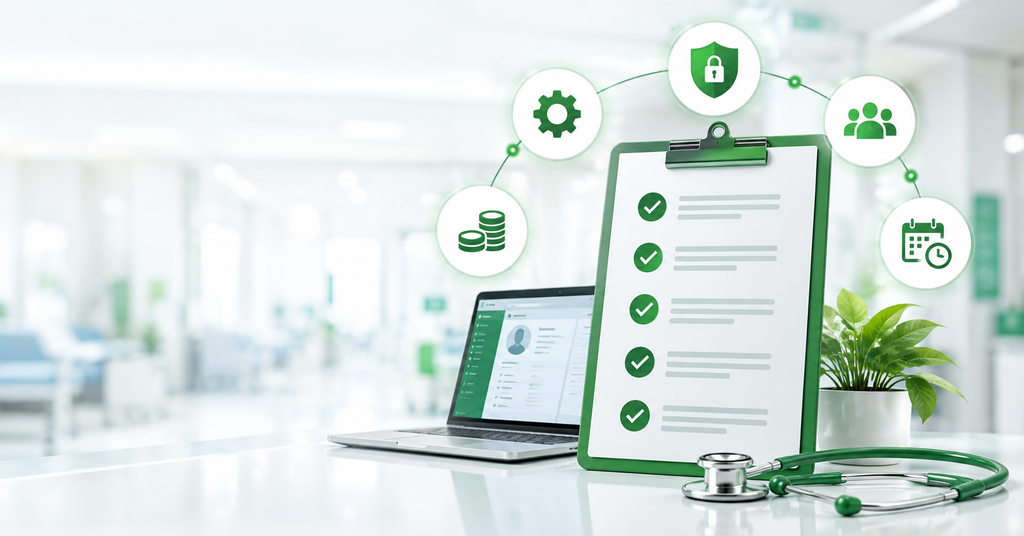
Use this structured checklist when evaluating prospective NABIDH certified EMR providers:
VENDOR VERIFICATION CHECKLIST
1. Written Approval Letter
Obtain the official, current DHA integration approval certificate.
2. Re-Certification History
Confirm when the system was last re-tested following code updates.
3. Active Facility References
Speak directly with an active reference clinic operating in Dubai.
4. Regulatory Register Listing
Cross-reference current status on the active DHA vendor register.
5. Specification Update Terms
Verify contractual terms for regulatory updates and changes.
- Request the Official Approval Letter: Ask for proof that the vendor offers an officially recognized NABIDH certified EMR via their DHA approval letter. Inspect the document for issue dates, software version numbers, and explicit reference to NABIDH production access.
- Review Testing and Update Timelines: Ask when the platform’s certification was last issued or renewed. Inquire whether recent major platform updates required formal re-conformance testing.
- Request Active Reference Contacts: Ask for contacts at an active clinic operating live with the vendor’s NABIDH certified EMR solution. Confirm their experience with ongoing data transmissions and support responsiveness.
- Confirm Register Inclusion: Cross-reference the vendor against the current DHA approved list. Because public portal links and access channels update, ask the vendor to present the exact access path to their entry on the current registry.
- Clarify Contractual Terms for Regulatory Updates: Ask specifically how compliance updates are handled when DHA changes data standards. Ensure you understand what deploying a NABIDH certified EMR actually costs over time, and confirm whether regulatory maintenance is included in your contract or billed separately.
Risks of Selecting an Uncertified Vendor
The DHA does not permit custom workarounds or uncertified gateways to submit clinical data to NABIDH.
[ UNCERTIFIED VENDOR ]
│
▼
[ DHA Technical Pipeline Blocked ]
│
┌────────────────────┴─────────────────────┐
▼ ▼
Option A: Wait for Vendor Option B: System Switch
• Extended engineering delays • Unplanned capital expense
• Missed compliance deadlines • Urgent data migration
• Facility licensing holds • Staff retraining required
If a facility contracts with an uncertified provider, management faces two main challenges:
- Extended Engineering Delays: Waiting for an uncertified vendor to complete DHA sandbox testing, fix schema errors, and secure approval often takes months longer than initial estimates.
- Costly System Migration: If licensing deadlines approach, the clinic may need to terminate the vendor contract, procure an approved platform, and execute an emergency data migration.
Real-World Onboarding Scenario
A multi-specialty polyclinic in Dubai signed with an international EMR vendor that claimed to be “fully NABIDH-ready.” Six weeks before their facility licensing audit, the clinic discovered the vendor held no formal DHA conformance letter and was attempting to build custom HL7 FHIR mappings on the fly.
The vendor’s sandbox test files were repeatedly rejected due to improper data mapping against the NABIDH Minimum Data Set. Facing license suspension, the clinic terminated the contract, migrated its patient records to a fully NABIDH certified EMR vendor, and completed sandbox and SIT testing within a revised timeframe.
This delay led to unexpected software replacement expenses, duplicate implementation costs, and delayed clinical operations.
How Medic Handles Certification and Compliance
At Medic EMR platform, operating as a top-tier NABIDH certified EMR means regulatory alignment is treated as a core structural requirement rather than an optional add-on module.
- Validated Architecture: Medic maintains active integration capabilities compliant with DHA specifications, utilizing native HL7 FHIR pipelines mapped to the NABIDH Minimum Data Set.
- Managed Onboarding: Medic handles technical configuration, sandbox payload generation, and SIT review coordination on behalf of facility staff, eliminating technical friction.
- Continuous Updates: When regulatory requirements shift, compliance updates are deployed across the platform centrally, ensuring ongoing alignment without unexpected custom development fees.
Conclusion & Next Steps
When evaluating EMR software for Dubai-based healthcare facilities, remember two clear rules: get official DHA certification documentation in writing, and remember that vendor certification is only the first half of facility compliance.
Verifying vendor status early protects your investment, secures your operating license, and ensures your clinical workflows run without interruption.
Get Your Compliance Assessment
Contact our team to review your facility’s operational setup, inspect platform integration capabilities, and establish a clear path to full NABIDH compliance.
- Schedule a Demo: Book an Onboarding Consultation
- Email: sales@freit.io
- Direct Line: +971-52-4482573
Frequently Asked Questions
What does it mean for an EMR to be “NABIDH certified”?
It means the NABIDH certified EMR software provider has passed technical conformance testing administered by the Dubai Health Authority (DHA). This testing confirms the software can format, transmit, and receive clinical records using HL7 FHIR standards and match the NABIDH Minimum Data Set (MDS). Certified platforms are listed on the official DHA register.
Is a vendor’s claim of being ‘NABIDH-ready’ the same as having a NABIDH Certified EMR?
No. Terms like “NABIDH-ready” or “NABIDH-compatible” are informal marketing phrases with no regulatory standing. Official compliance requires a formal conformance approval letter issued by the DHA. Accepting soft claims without written verification exposes facilities to licensing delays and integration failures.
If I choose a NABIDH Certified EMR, is my clinic automatically NABIDH compliant?
No. Vendor certification confirms the software platform’s technical capability, but your facility must complete its own onboarding process. This includes mapping facility credentials in the Sheryan portal, submitting sample data during sandbox testing, and passing a System Integration Test (SIT) to receive a live production connection.
How can I verify if a vendor’s NABIDH Certified EMR status is current?
Request a copy of the vendor’s official DHA integration approval letter, including current version details. Contact active healthcare providers in Dubai using the platform to confirm their operational integration status, and ask the vendor to demonstrate their current listing on the DHA register.
What happens if I sign with a vendor that turns out not to be certified?
The DHA will not permit uncertified software to connect to the NABIDH ecosystem. You will either need to wait for the vendor to go through technical testing which can take months or switch to an approved system to meet your licensing deadlines.