
DHA and MOH Audit Readiness: Streamlining Compliance with NABIDH and Riayati

Running a high-volume specialty clinic in the UAE whether specializing in dermatology, dentistry, or internal medicine means balancing top-tier patient care with strict regulatory standards. In the current healthcare landscape, keeping up with compliance is no longer a periodic chore; it is an active, daily operational requirement. With the Dubai Health Authority (DHA) and the Ministry of Health and Prevention (MOH) actively enforcing digital integration mandates, the window for manual, paper-heavy documentation has closed. Healthcare providers across Dubai and the Northern Emirates face rigorous clinical audits designed to ensure total alignment with National Health Information Exchanges (HIEs). For Medical Directors and Operations Managers, these inspections often bring a wave of administrative stress, manual tracking, and the lingering fear of insurance claim rejections or compliance fines. However, compliance does not have to be an operational bottleneck. Transitioning to a “Smart EMR” baseline allows your practice to turn audit preparation into a seamless, background routine. Medic by Freit.io is built specifically to address these challenges, offering UAE clinics a path to 100% compliance with zero server maintenance, automated reporting, and an intuitive interface that keeps your clinic permanently audit-ready. What are the main requirements for a DHA or MOH clinical audit? A clinical audit by the DHA or MOH evaluates how safely, securely, and accurately your clinic manages patient data. Inspectors look closely at your Electronic Medical Record (EMR) systems to confirm that your workflows match federal and emirate-level healthcare mandates. CORE CLINICAL AUDIT PILLARS ───────────────────┬───────────────────┬──────────────── DATA PRIVACY ACCESSIBILITY AUTOMATION & & SECURITY & TRACEABILITY ERROR REDUCTION 1. Patient Data Privacy and Security Standard Your clinic must show a clear, secure audit trail for every electronic medical record. This means protecting patient files from unauthorized access while making sure authorized medical staff can pull up history instantly. EMR platforms must use secure access controls, end-to-end encryption, and reliable data backups that follow UAE healthcare laws. 2. Immediate Data Accessibility and Traceability During an active inspection, auditors will not wait for your staff to dig through fragmented paper files or clunky legacy software. You need to be able to pull complete patient histories including past diagnoses, treatment plans, prescriptions, and lab results in real time. Every entry must clearly show the date, time, and the license details of the treating clinician. 3. The Role of Automated Reporting in Minimizing Human Error Manual data entry is one of the biggest liabilities during a DHA or MOH clinical audit. Typographic errors, missing ICD-10 codes, or incomplete documentation can quickly trigger red flags. Modern EMR automation eliminates these risks by validating entry fields automatically, auto-populating routine codes, and compiling clean, comprehensive data sheets. Switching to automated workflows helps your clinic remove human error from the equation, keeping your data accurate and reliable for any surprise inspection. How can I ensure my clinic is fully prepared for a NABIDH compliance check? For clinics operating in Dubai, integrating with NABIDH (Network for Integrated Care and Health in Dubai) is a strict regulatory mandate, not an optional feature. Passing a NABIDH compliance check depends entirely on how effectively your EMR communicates with the central DHA platform. Medic Cloud EMR ───────────┬──────────── │ [ Secure Integration ] │ ▼ NABIDH Central Health Information Exchange (DHA) Checklist 1: Real-Time Data Synchronization Your EMR must actively sync patient encounters with the NABIDH ecosystem. Delayed uploads create data gaps that stand out during an audit. Checklist 2: Correct Mapping of Clinical Coding (ICD-10 & CPT) NABIDH relies on unified coding to track public health trends and clinical outcomes. Incorrectly mapped codes cause compliance mismatches and disrupt your billing cycle. Checklist 3: Instant Audit-Ready Report Generation When an auditor asks for a compliance summary, your front-desk and clinical teams should not have to spend hours compiling spreadsheets manually. Why is Riayati integration mandatory for clinics in the Northern Emirates? If your medical group operates in Sharjah, Ajman, Ras Al Khaimah, Fujairah, or Umm Al Quwain or plans to expand there Riayati compliance is essential for your facility’s licensing and operations. Launched under the direction of the Ministry of Health and Prevention (MOH), Riayati serves as the National Health Information Exchange (HIE) for the Northern Emirates. It builds a unified federal medical record system for every citizen and resident in the UAE. Regulatory Reality: Failing to integrate your clinic’s software with the central Riayati database can lead to formal operational warnings, heavy financial penalties, or issues when renewing your facility’s institutional license. An EMR that supports native Riayati connectivity gives your practice a distinct advantage: Does a cloud-based EMR improve clinical documentation accuracy for inspections? The short answer is yes. Fragmented paper charts and disconnected local servers frequently lead to missing files, unreadable physician notes, and incomplete histories. A cloud-based EMR solves these issues by creating a centralized, accessible digital space for your clinical data. MEDIC’S CLINICAL WORKFLOW ───────────────────┬───────────────────┬──────────────── 1-Click RX │ Integrated Labs │ Central Records Reduces errors │ Direct diagnostic │ Single true & saving time │ data syncing │ patient file Streamlining the Patient Journey A secure cloud EMR connects every step of the patient experience. When a patient moves from the waiting room to the consultation office, and then to the in-house pharmacy or lab, their digital file updates automatically. Doctors get an immediate, comprehensive view of the patient’s status without needing to wait for physical files to move across departments. Key Digital Tools That Protect Compliance Saving Time
Reducing Clinical Documentation Time by 40%: The Makkah Medical Center Case Study
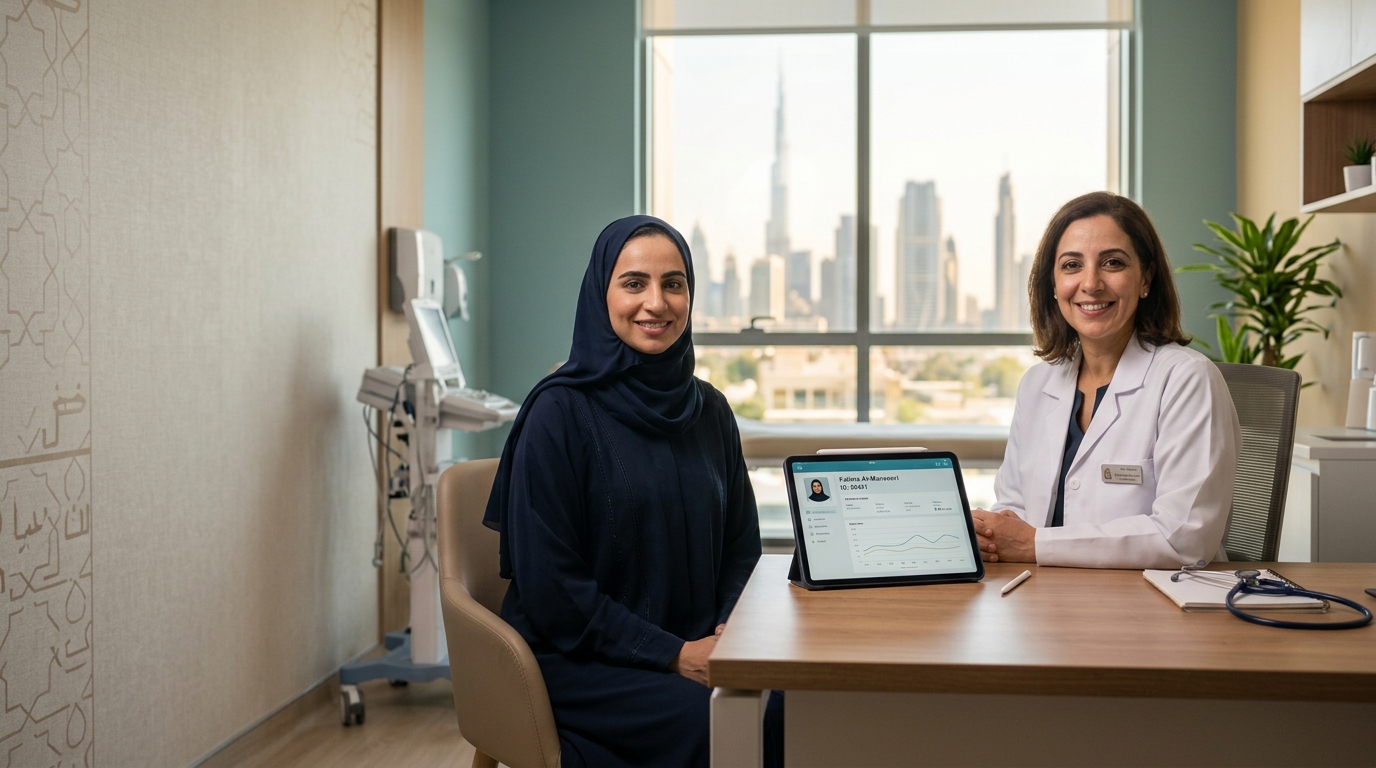
The UAE healthcare landscape is experiencing unprecedented growth, but with rapid expansion comes immense operational pressure. In high-volume clinics across Dubai and Sharjah, healthcare executives face a silent crisis: documentation fatigue. Frontline physicians are drowning in paperwork, spending more time interacting with legacy software and paper charts than looking at their patients. To transition your facility from administrative chaos to clinical clarity, adopting a high-performance Electronic Medical Records UAE system is no longer a luxury it is an operational necessity. The recent digital transformation at Makkah Medical Center serves as the gold standard for this transition, proving that the right technology can fundamentally rewrite a clinic’s bottom line. What is the primary cause of physician burnout in UAE clinics? Physician burnout is rarely caused by patient care itself; it is driven by the invisible weight of administrative overload. Documentation fatigue occurs when highly trained medical professionals spend their shifts performing manual data entry, clicking through poorly designed interfaces, and hunting down physical paper files. Consider the hidden mathematical drain of manual charting on an average clinic: Task Component Manual / Legacy System Time Optimized Digital System Time Time Saved Per Patient Chart Review & History 5 minutes 1.5 minutes 3.5 minutes Note-Taking & Diagnostics 7 minutes 3.0 minutes 4.0 minutes Prescription & Referrals 4 minutes 0.5 minutes 3.5 minutes Total Per Encounter 16 minutes 5.0 minutes 11.0 minutes When a single physician loses 11 minutes per patient across a daily roster of 30 patients, the facility loses 5.5 hours of productive clinical time every single day. This artificial ceiling limits total daily patient throughput and deflates revenue potential, making it vital to optimize your electronic medical records UAE software for growth, and pushes lead clinicians into working exhausting, uncompensated hours just to finish their charts. How can an electronic medical records UAE system reduce clinical documentation time? To recover these lost hours, forward-thinking medical directors are moving away from fragmented, legacy applications and deploying the Medic by Freit.io platform. Medic acts as a centralized “Digital Gateway” for your entire healthcare ecosystem. Instead of forcing your medical staff to toggle between isolated laboratory apps, independent pharmacy software, and internal spreadsheets, Medic consolidates the entire patient journey into a singular dashboard. When all demographic data, historical vitals, and external clinical inputs live under one roof, the cognitive load on your physicians drops instantly. Navigating a patient profile changes from a frustrating multi-screen scavenger hunt into a seamless, fluid workflow. What are the key features of the Medic Efficiency Suite? The Medic by Freit.io platform targets administrative bottlenecks with three core technical features engineered specifically for clinical velocity: 1-Click Prescriptions Writing prescriptions manually or navigating multi-layered dropdown menus slows down care delivery. Medic introduces intuitive “Online Prescription Orders” that pull from standardized, pre-approved regional drug formularies. With a single click, a physician can authorize standard dosages, cross-reference allergy conflicts, and route the script directly to the pharmacy loop without leaving the active encounter screen. Integrated Diagnostics Delays in care often happen while waiting for external imaging or lab results. Medic eliminates this friction by embedding “Digital Lab Reports” and radiological images directly into the active patient timeline. Clinicians view diagnostic data instantly, removing the need to log into separate lab portals or handle physical film. Automated Treatment Plans Repetitive typing is the single largest contributor to documentation fatigue. The Medic Efficiency Suite uses highly customizable templates tailored to specific medical disciplines. Rather than drafting routine management plans from scratch, physicians pull up pre-structured protocols within their electronic medical records UAE interface, allowing them to rapidly document complex cases without sacrificing accuracy. How did Makkah Medical Center slash documentation time by 40%? Before revamping their clinical workflow, Makkah Medical Center struggled with severe operational bottlenecks. Doctors routinely finished their shifts hours late due to incomplete charts, and patient wait times in the lobby were steadily climbing. By executing a structural transition to the Medic suite, the center achieved a verified 40% reduction in documentation time, setting a new benchmark for electronic medical records UAE performance. [Legacy System Workflow] ──> Fragmented Data ──> Manual Audits ──> 16 Min Charting │ (Reduction) ▼ [Medic by Freit.io] ──> Central Gateway ──> Real-Time Tracking ──> 5 Min Charting The facility achieved this success by leveraging two specific structural upgrades: Can a centralized Electronic Medical Records UAE improve patient satisfaction? Clinical efficiency benefits the patient just as much as it benefits the balance sheet. When a doctor isn’t forced to stare at a monitor typing out notes, they can look their patient in the eye, listen to their concerns, and deliver more empathetic, focused care. Furthermore, a modern electronic medical records UAE architecture optimizes the entire patient journey outside the exam room: Is it easy to integrate integrated diagnostics and lab results? Yes. The underlying architecture of the Lab Test & Reports module is engineered to sync effortlessly with standard laboratory information systems (LIS) and imaging networks. Instead of administrative staff manually scanning, uploading, or routing paper results, the system relies on automated data processing. The moment a lab technician validates a panel or an imaging center uploads a scan, the system triggers “Real-Time Notifications” directly to the ordering physician’s dashboard. Doctors can instantly review findings, sign off on the results, and communicate the treatment adjustments to the patient in a single step, drastically accelerating case closure rates—a hallmark of a superior electronic medical records UAE integration. What is the impact of automated treatment plans on clinical accuracy? Speed should never come at the expense of patient safety. By utilizing automated templates, clinics significantly reduce the human errors associated with manual data entry, such as illegible handwriting, incorrect dosage abbreviations, or omitted contraindications. Importantly, these templates are not rigid scripts. The platform provides “Flexible Management” options, allowing physicians to modify pre-built templates on the fly to fit a patient’s unique clinical presentation. This balance of automation and clinical flexibility allows for easy adjustments to ongoing care plans, scheduling changes, and long-term treatment tracking within the electronic
UAE Healthcare Cloud Security: Data Residency and HIPAA Standards for 2026

The UAE healthcare landscape is experiencing an unprecedented digital evolution. With the mandatory integration of unified Health Information Exchanges (HIE) like NABIDH in Dubai and Riayati across the Northern Emirates, clinic operational models have fundamentally shifted. Managing patient charts on isolated, on-premise hardware or scattered legacy software is no longer just an operational bottleneck, it is a compliance liability, particularly concerning healthcare data security standards. In this fast-evolving ecosystem, robust healthcare data security is no longer a back-office IT checklist. It is a core pillar of clinical integrity and a distinct competitive advantage. For IT Heads and Operations Managers tasked with safeguarding multi-specialty polyclinics, the pressure to protect sensitive medical records while maintaining frictionless clinical workflows is immense. Transitioning to a secure, cloud-based framework eliminates the massive overhead of managing on-site servers while keeping your facility fully aligned with global protocols. Platforms like Medic by Freit.io are specifically engineered to deliver this balance, providing “HIPAA-grade” protection and localized compliance out of the box. This comprehensive guide breaks down the 7 critical strategies your clinic must implement to achieve total data security and seamless compliance in 2026. Why is healthcare data security the top priority for UAE medical clinics in 2026? Medical records are highly prized targets for cybercriminals, often commanding a premium on the dark web compared to standard financial data. A single breach can expose deeply personal histories, insurance details, and national identification data, leading to severe reputational fallout and operational paralysis. Within the UAE, regulatory bodies have established strict frameworks to ensure patient data privacy. Unauthorized access whether from an external cyber threat or an internal staff member lacking proper clearance carries steep statutory penalties. [Legacy On-Premise Servers] ──(Risk)──> Vulnerable to local hardware failure & local breaches [Medic Cloud Infrastructure] ──(Shield)──> Built-in firewalls + Automatic security patches Prioritizing enterprise-grade healthcare data security acts as a proactive defense mechanism. By encrypting medical records at rest and in transit, clinics build a digital fortress around their operations. This level of protection ensures that even if data is intercepted, it remains entirely unreadable and useless to unauthorized parties, preserving the sacred trust between patient and provider. Is cloud-based EMR storage legal under UAE data residency laws? One of the most frequent hurdles for healthcare operations teams is navigating UAE Data Residency laws. Specifically, Federal Decree-Law No. 45 of 2021 on Personal Data Protection explicitly outlines how citizen and resident data must be handled. The Core Rule: Health data generated within the UAE must be stored, processed, and hosted on servers physically located inside the country’s geographical borders, unless explicit regulatory approval is granted. Cloud storage is completely legal, highly encouraged, and exceptionally secure for maintaining healthcare data security, provided your cloud partner utilizes local data centers. UAE Health Data │ Is the server inside the UAE? ───────┬───────────┬─────── │ │ Yes No ▼ ▼ FULLY COMPLIANT LAW VIOLATION Medic Cloud Hosting Foreign Public Cloud Medic eliminates this compliance headache through localized cloud hosting. By utilizing sovereign cloud infrastructure located entirely within the UAE, Medic ensures your clinic remains 100% compliant with local data sovereignty laws. The secondary benefit? Zero server maintenance. Your operations team no longer needs to worry about cooling costs, physical server room security, or manual backups; the entire infrastructure is managed automatically in a secure, local cloud environment. How do HIPAA standards apply to healthcare providers in Dubai and the Northern Emirates? While the Health Insurance Portability and Accountability Act (HIPAA) is fundamentally a United States federal law, HIPAA standards serve as the global gold standard for digital health systems. When a platform is built to “HIPAA-grade” specifications, it naturally satisfies and exceeds the baseline requirements set by the Dubai Health Authority (DHA) and the Ministry of Health and Prevention (MOHAP). The core framework relies on three fundamental pillars: Medic embeds these technical safeguards directly into its architecture. By deploying advanced encrypted medical records alongside rigorous role-based access controls (RBAC), the system ensures that a receptionist can only view scheduling data, while granular clinical histories remain restricted exclusively to authorized medical practitioners. What are the best practices for maintaining healthcare data security during a clinical audit? An audit from the DHA or MOHAP can be incredibly stressful if your documentation is fragmented across various physical files and systems. To achieve a seamless clinical audit, your data architecture must be transparent, centralized, and rapidly accessible. [Fragmented Systems] ──> Long search times + Lost files = Audit Risk [Centralized Cloud] ──> One-click exports + Clean logs = Instant Compliance 1. Maintain an Immutable Audit Trail Ensure your EMR system logs every single interaction. You must be able to instantly show auditors exactly who accessed a patient’s chart, what changes were made, and precisely when the interaction occurred. 2. Implement Automated HIE Reporting Manually pulling data to prove compliance with NABIDH or Riayati invites errors. Utilizing automated, audit-ready reporting fields allows your operations manager to export verified compliance metrics with a single click. 3. Eliminate the Paper Trail Physical paper charts are inherently insecure; they can be misplaced, incorrectly filed, or viewed by unauthorized visitors. Migrating to a centralized cloud EMR ensures that all compliance logs are backed up systematically across secure servers, completely removing physical vulnerabilities. Can a secure EMR system reduce insurance claim rejections? Data integrity is directly tied to your clinic’s financial health. A significant percentage of insurance claim rejections stem from minor administrative discrepancies: mismatched patient identifiers, incomplete diagnostic codes, or missing clinical documentation notes. When your EMR platform enforces absolute data integrity, the quality of your outbound data improves dramatically. By securely linking clinical entries to the Dubai Health Post Office (DHPO) and regional insurance clearinghouses, the system ensures that every submitted claim is backed by complete, accurately mapped
Unified EMR Compliance for Multi-Specialty Clinics: Lessons from Masterdent and Abrah Clinics
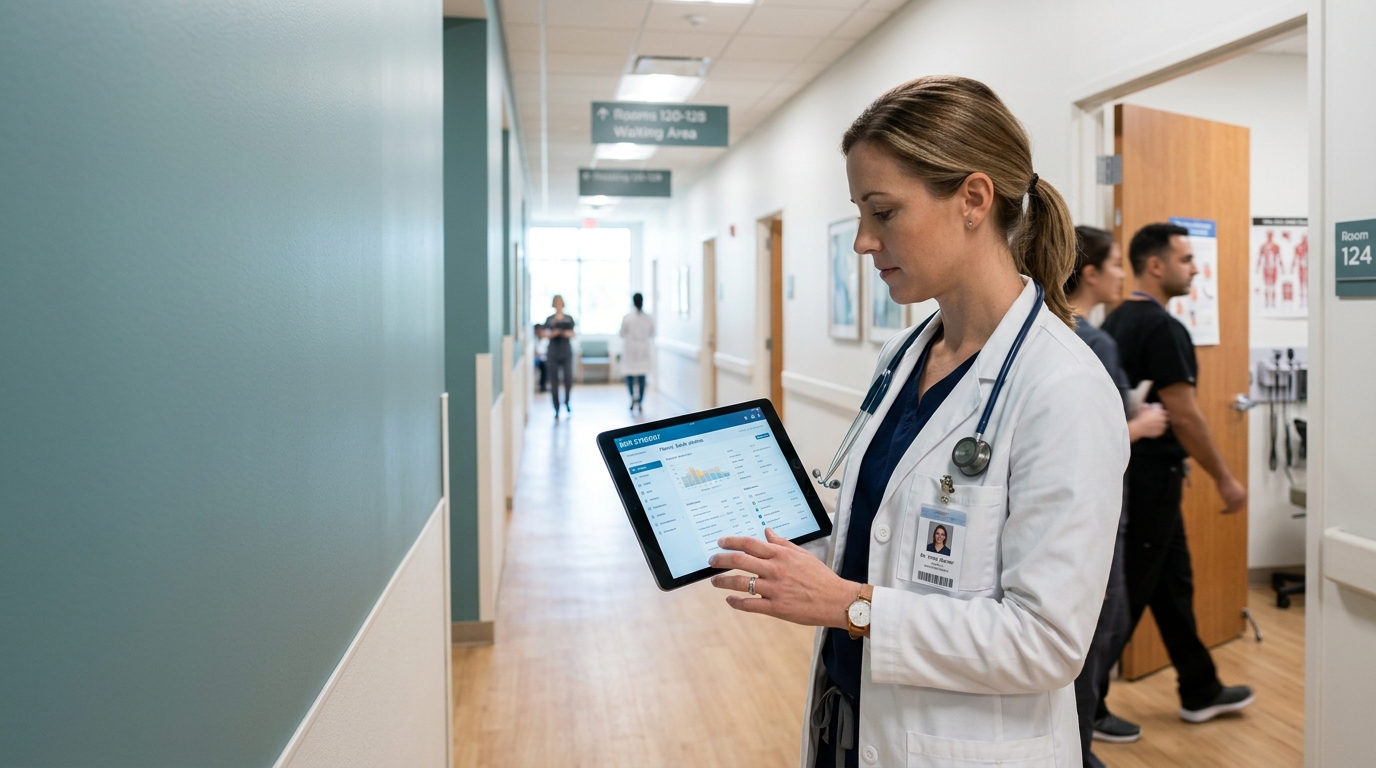
The UAE healthcare sector is undergoing a massive, technology-driven paradigm shift. Driven by national initiatives aimed at positioning the country as a global hub for medical tourism and cutting-edge clinical care, regulatory bodies in Dubai, Abu Dhabi, and Sharjah have established stringent data policies. For expanding multi-specialty clinics, managing patient care across varied clinical departments while remaining completely compliant with evolving regulatory standards is a complex operational challenge. Moving away from legacy, fragmented systems toward an ecosystem of “Smarter Healthcare” is no longer optional; it is a baseline requirement for growth. Adopting a robust, certified EMR system UAE has become the defining factor between operational gridlock and scaling successfully. Today, more than 50+ clinics across the Emirates are leveraging Medic by Freit.io to dismantle data silos, optimize workflows, and build an unshakeable foundation for compliance. What is an EMR and why is a unified EMR system UAE vital for multi-specialty clinics? An Electronic Medical Record (EMR) is a digital version of a patient’s clinical chart, containing medical history, diagnoses, medications, immunization dates, and lab results compiled within a specific practice. While a single-discipline practice can survive with simple record-keeping software, a multi-specialty facility requires a robust EMR system UAE to navigate entirely different operational hurdles. In a typical multi-specialty clinic setting such as when a patient visits an internal medicine specialist, is referred to a dental unit, and finishes with a laboratory test information often becomes trapped in departmental silos. This manual data routing leads to: Prominent healthcare leaders like Masterdent and Abrah Clinics have actively solved this issue by adopting centralized unified medical records. When an EMR brings all clinical departments into a singular ecosystem, clinic directors can accurately monitor administrative logs, data access, and patient care timelines across the board. How does unified EMR compliance improve patient safety in the UAE? Patient safety is directly tied to accurate, accessible clinical documentation. In a multi-specialty facility, a breakdown in communication between a general practitioner and a specialist can lead to adverse drug interactions, duplicate diagnostic testing, or missed clinical diagnoses. Implementing a unified EMR system UAE with health IT compliance practices radically reduces medical errors through features like: This inter-departmental visibility keeps the entire medical team aligned, ensuring that patient management remains completely synchronized and accurate across every shift. Can a centralized EMR system UAE reduce clinic administrative costs? Operating a multi-specialty healthcare facility involves high administrative overhead, often driven by extensive front-desk staffing, manual patient scheduling, follow-up management, and complex billing reconciliation across distinct clinical units. A centralized EMR system UAE reduces these operational expenses through automation: Manual Administration Pitfalls Automated EMR Solution Front-desk bottlenecks due to manual phone check-ins Instant Online Doctor Booking shifting scheduling online Missed appointments and open, unbilled provider slots Automated Reminders directly notifying patients via SMS/Email Manual data re-entry for cross-specialty billing Automated, centralized multi-specialty invoicing systems By automating repetitive administrative tasks, clinics significantly lower their operational dependencies on large front-desk teams. This allows existing administrative staff to focus on high-priority client care and complex internal billing processes, driving down operational expenses. What are the healthcare data privacy laws for clinics in Dubai and Sharjah? The regulatory environment for medical records in the United Arab Emirates is strictly managed. Legislation such as UAE Federal Decree-Law No. 45 of 2021 on Personal Data Protection, alongside executive regulations from the Ministry of Health and Prevention (MOHAP), the Dubai Health Authority (DHA), and the Sharjah Health Authority (SHA), mandates strict guidelines on how patient information is captured, archived, and communicated. Key compliance considerations for local healthcare providers include: Adopting verified systems ensures that secure medical data sharing happens within validated parameters, keeping practices safe from heavy regulatory penalties. How do Masterdent and Abrah Clinics use digital portals to enhance the patient journey? For modern clinics, compliance is only half the battle; consumer-facing patient satisfaction determines ongoing clinic growth. Premium healthcare brands like Masterdent and Abrah Clinics have addressed both challenges by deploying a specialized digital patient portal Dubai residents expect for modern convenience. Through a single Centralized Dashboard, patients can easily review their medical records, access active prescriptions, review laboratory work, and confirm appointment histories without needing to call the front desk. This transparent structure saves valuable admin time, boosts retention rates, and positions the clinic as an innovative, patient-focused enterprise. What features should I look for in a modern UAE medical record system? Selecting the right clinical infrastructure dictates your facility’s long-term operational velocity. When vetting an enterprise healthcare solution, ensure it includes these essential modules: Is it difficult to migrate a multi-specialty clinic to a new EMR? The fear of operational downtime prevents many clinical directors from switching legacy systems. Migrating several distinct medical departments, historic patient charts, and billing accounts feels like a massive chore. Mitigating Downtime Risk: The transition to modern platforms like Medic by Freit.io avoids these common headaches. Built with Flexible Management principles, the platform structures old clinical data points logically, smoothing out your internal workflows. Comprehensive provider training and intuitive user paths ensure your nursing and clinical teams adapt quickly, preventing drop-offs in patient care during the rollout. How does the “Settings Page” help clinic staff manage user preferences? A key element of this easy onboarding is the Settings Page. This module allows administrative staff to customize the interface for different roles. Doctors, billing officers, and lab techs see only what matters to them, tailoring the software to specific workflows while maintaining strict, role-based data control. Conclusion & Native CTA Transitioning from disparate software setups to an integrated EMR system UAE is the ultimate Digital Gateway to clinic expansion, regulatory compliance, and excellent patient care. By taking a cue from successful organizations like Masterdent and Abrah Clinics, your practice can turn compliance requirements into an operational superpower. Ready to transform your clinic’s operations? Find clinics already succeeding with our platform or Get Started Now to see the power of a unified EMR System UAE in action. Frequently Asked Questions 1. What does the UAE health data localization law