
Cloud EMR UAE adoption is no longer a forward-looking strategy for progressive clinics. It is the operational baseline that regulators, patients, and the healthcare market now expect. Picture a clinic director in Dubai Healthcare City opening her inbox on a Monday morning to find a DHA audit notification, an IT invoice for emergency server maintenance, and three patient complaints about delays in accessing records from a previous visit. Each of these problems traces back to the same root cause: a legacy on-premise EMR system that was designed for a different era of healthcare entirely.
This situation is playing out across the UAE with increasing frequency. Clinics that invested in traditional electronic medical records systems five or ten years ago are finding that those platforms can no longer keep pace with NABIDH compliance requirements, multi-site operations, or the data security standards that modern healthcare demands.
The UAE digital health market was valued at over USD 619 million in 2023 and is projected to grow at a compound annual rate of 23.3% through 2030, driven directly by government mandates, regulatory reform, and clinic digitisation initiatives. The shift to cloud technology is central to that growth trajectory.
This guide explains exactly why UAE clinics are making the switch, what they are leaving behind, and how Medic by Freit.io makes the transition straightforward, compliant, and built for long-term growth.
Table of Contents
The Legacy EMR Problem: Why Older Systems Are Failing UAE Clinics
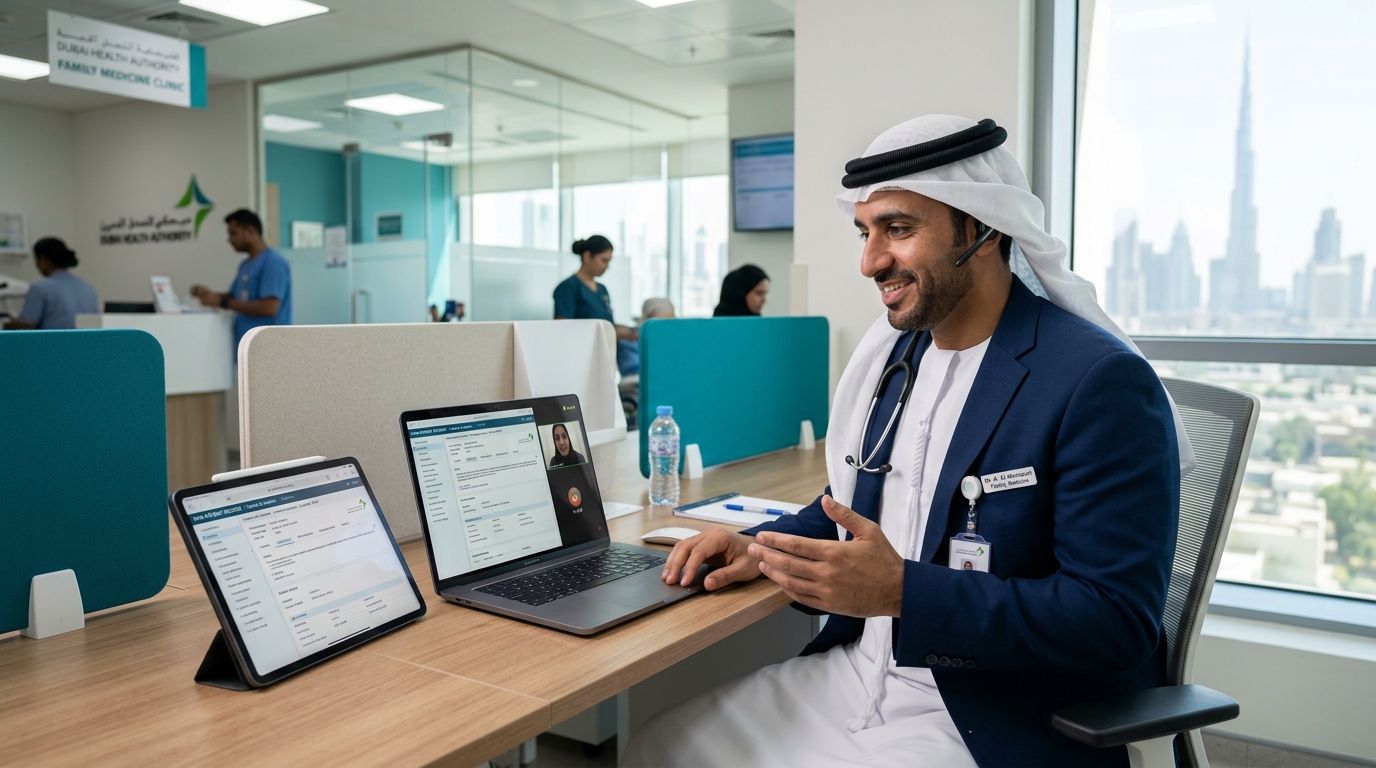
Traditional on-premise EMR systems were built at a time when clinics stored data locally, operated independently, and faced far fewer regulatory requirements. They represented a significant step forward from paper records when they were introduced. In the UAE healthcare environment of 2026, however, they are creating compounding operational and compliance problems that are difficult to solve with software patches or workarounds.
Limited Accessibility Across Locations and Devices
Legacy systems tie patient data to physical server rooms. A doctor consulting at a satellite branch cannot access the main clinic’s records without a VPN or complex remote desktop setup. Clinical staff working across multiple rooms or departments lose time navigating disconnected data. In a healthcare landscape where multi-site operations, telehealth, and mobile consultations are expanding rapidly, this constraint directly reduces the quality and speed of patient care.
Escalating Maintenance and Infrastructure Costs
On-premise systems demand ongoing investment in hardware, server upgrades, IT support contracts, and cybersecurity patching. According to research on five-year total cost of ownership, a solo practice managing an on-premise system spends approximately $30,000 on IT support over five years compared to roughly $2,500 for a cloud-based equivalent. For a growing clinic with multiple doctors and expanding data volumes, these costs compound quickly and divert budget from clinical priorities.
Compliance Gaps That Cannot Be Patched Away
Meeting NABIDH, Riayati, and DHPO requirements with a legacy system typically requires expensive custom development, third-party connector tools, or manual workarounds that introduce new failure points. The Dubai Health Authority requires automated, real-time data transmission in structured formats. Most legacy platforms were not architected to support HL7 and FHIR protocols natively, making genuine compliance a technically difficult and costly proposition.
Warning: Using a non-certified or legacy EMR system that cannot support automated NABIDH data transmission is not simply an IT inconvenience. It is a direct compliance failure that can result in a DHA audit flag, a delayed licence renewal, and operational disruption to your entire facility.
Scalability Constraints That Limit Growth
When a clinic adds a new doctor, a new branch, or a new department, on-premise systems often require hardware upgrades, additional licences, and IT configuration work before the new capacity can be used. This creates delays, unexpected costs, and operational friction at precisely the moments when a clinic should be focusing on growth, not infrastructure.
Why Cloud EMR UAE Platforms Are Built for This Environment

Modern cloud EMR solutions address every one of these limitations directly. They are not simply digitised versions of older systems. They are architecturally different platforms built for connectivity, compliance, and scale from the ground up.
NABIDH Compliance Built Into the Platform
The most operationally significant advantage of a purpose-built cloud EMR UAE platform is that regulatory compliance is not an add-on feature. It is embedded into the core architecture. Every patient consultation generates structured, coded data that is automatically transmitted to the NABIDH backbone in real time. No manual exports. No separate portal logins. No compliance officer spending three days a month compiling reports.
For clinics operating in the Northern Emirates, the same applies to Riayati. For Dubai clinics accepting insured patients, DHPO integration handles electronic claim submission automatically within the same platform. To understand how these three systems interact and which applies to your clinic’s location, the Medic guide to NABIDH vs Riayati vs DHPO breaks down the regulatory map in full.
Real-Time Access From Any Device, Anywhere
Cloud platforms allow authorised clinical staff to access patient records securely from any device with an internet connection. A specialist seeing a patient at a satellite clinic in Sharjah can view records created at the Dubai main branch in the same session. A doctor completing a follow-up call from home has full access to the patient file. This is not a convenience feature. It is a clinical safety improvement that reduces the risk of incomplete information during patient encounters.
Automatic Security Updates and Data Protection
Cloud vendors maintain dedicated security teams and infrastructure that would be prohibitively expensive for individual clinics to replicate. Enterprise-grade encryption, role-based access controls, automated backups, and continuous security patching are built into the subscription. For context, there were 725 documented healthcare data breaches globally in 2023, and on-premise systems where security patching depends on internal IT teams are disproportionately represented in those incidents.
Predictable Cost Structure and Lower Total Outlay
Cloud-based EMR shifts healthcare IT spending from unpredictable capital expenditure to a stable operational subscription. There are no emergency server replacement costs, no major hardware refresh cycles, and no surprise IT bills. Leadership can forecast technology costs with accuracy and allocate budget to clinical priorities rather than infrastructure management.
Cloud EMR vs Legacy On-Premise: Full Comparison for UAE Clinics
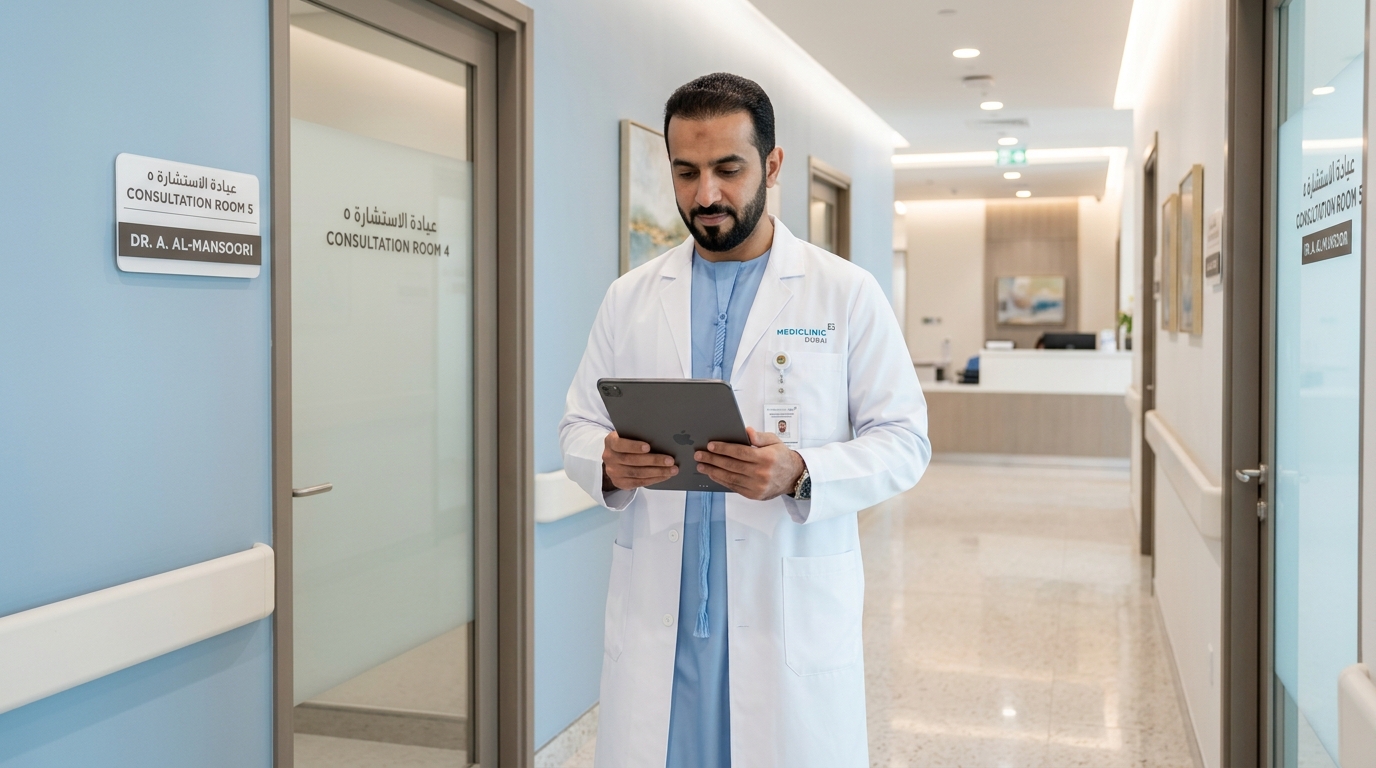
| Feature | Legacy On-Premise EMR | Cloud EMR UAE |
|---|---|---|
| NABIDH / Riayati Integration | Requires costly custom development | Built in natively |
| Data Access | Restricted to physical location | Any device, any location |
| IT Maintenance | Clinic’s internal team | Managed by vendor |
| Security Updates | Manual, team-dependent | Automatic, continuous |
| Scalability | Hardware upgrade required | Instant, subscription-based |
| Upfront Cost | High ($15,000 to $70,000+) | Low, subscription model |
| 5-Year IT Support Cost | ~$30,000 per practice | ~$2,500 per practice |
| Compliance Reporting | Manual compilation | Automated, on-demand |
| Disaster Recovery | Dependent on local backups | Vendor-managed with SLA |
| Multi-Site Support | Complex, requires VPN setup | Native, real-time |
The UAE’s Digital Health Mandate Is Accelerating the Switch
The transition to cloud EMR in the UAE is not purely market-driven. It is being actively pushed by regulatory policy at both the emirate and federal levels. The Dubai Health Authority has made NABIDH integration a condition of annual licence renewal for every DHA-licensed facility. The Ministry of Health and Prevention requires Riayati integration for all MOHAP-licensed Northern Emirates facilities. Both mandates require automated, real-time data transmission that legacy systems fundamentally cannot deliver without significant and ongoing technical remediation.
According to Grand View Research, the UAE digital health market is on track to reach USD 1.84 billion by 2030, driven by government healthcare IT spending projected to exceed USD 1 billion and an emphasis on unified health records across the public and private sectors. Clinics that delay cloud adoption are not simply falling behind on technology. They are falling behind on regulatory compliance in a market that is enforcing those standards through licence renewal inspections.
Is your clinic still running a legacy system? Book a free demo with Medic by Freit to see what a fully compliant, cloud-native UAE EMR looks like in practice.
UAE Clinic Digitisation: What It Actually Means for Your Operations
UAE clinic digitisation is a term that appears frequently in policy documents and industry reports, but its practical implications for day-to-day clinic operations are worth examining directly.
For a clinic manager in Sharjah running a five-doctor general practice, digitisation means having a single platform where every consultation, every prescription, and every lab result is captured once, structured correctly, and available to every authorised team member instantly. It means insurance claims are submitted without manual portal entry, rejected claims trigger automatic alerts rather than being discovered during a monthly review, and NABIDH or Riayati data sync happens in the background of every appointment without any additional steps from clinical staff.
For a multi-specialty group operating across Dubai and Ajman, digitisation means consistent data standards, unified reporting across all locations, and compliance obligations handled by a single platform rather than coordinated across multiple disconnected systems.
This operational reality is what differentiates a genuine cloud EMR UAE platform from a simple records digitisation tool.
Cloud EMR Readiness Checklist for UAE Clinics
Use this checklist to assess your clinic’s current position and identify where a cloud transition would deliver the most immediate impact.
- [ ] Your current EMR requires staff to access the system from a specific device or location
- [ ] Your IT team or a third-party contractor manages server maintenance, backups, or security updates
- [ ] NABIDH or Riayati data submission requires manual steps, exports, or portal uploads
- [ ] Insurance claims through DHPO require staff to log into external portals separately
- [ ] Adding a new doctor or branch requires hardware procurement or IT configuration work
- [ ] Compliance reports for DHA or MOHAP take more than one working day per month to prepare
- [ ] Your system does not automatically apply ICD-10, CPT, or HL7 coding to clinical records
- [ ] Patient records from other Dubai facilities are not accessible to your doctors in real time
- [ ] You have received unexpected IT bills for server maintenance or emergency hardware replacement in the past 12 months
If you ticked four or more of the above, your current setup is costing you more in time, money, and compliance risk than a cloud transition would.
How Medic by Freit.io Delivers Cloud EMR for UAE Clinics
Medic by Freit.io was purpose-built for the UAE healthcare regulatory environment. It is not an international EMR platform with compliance features added on top. Every module, from clinical documentation to billing to compliance reporting, was designed with NABIDH, Riayati, and DHPO requirements at its core.
What Medic Delivers as a Cloud EMR UAE Platform
Full UAE Regulatory Coverage. Medic holds DHA certification for NABIDH integration and MOHAP alignment for Riayati, covering clinics in Dubai, Sharjah, Ajman, Ras Al Khaimah, Fujairah, and Umm Al Quwain within a single platform.
Real-Time Automated Compliance. Every consultation completed in Medic automatically generates structured, coded clinical data and transmits it to the relevant health information exchange in the background. No additional action is required from clinical or administrative staff.
Unified Billing and DHPO Integration. Insurance claims are validated, structured, and submitted directly through Medic’s billing module without requiring a separate DHPO portal login. Rejected claims are flagged immediately with alert notifications, preventing undetected revenue losses.
Cloud Access From Any Device. Doctors and administrators access Medic securely from any device with an internet connection, whether at the main clinic, a satellite branch, or during a telehealth consultation. Role-based permissions ensure that each team member sees only the data relevant to their responsibilities.
End-to-End Onboarding Support. The Medic team manages the complete technical onboarding process, including NABIDH and Riayati conformance testing with the relevant health authorities, staff training, and data migration from existing systems. Your clinic does not need an internal IT team to manage the transition.
Proven Track Record Across the UAE. Medic is trusted by over 50 clinics across Dubai, Sharjah, Abu Dhabi, and Fujairah spanning general practice, dental, dermatology, and multi-specialty operations. Learn more about the platform and its design or explore how NABIDH compliance works within Medic.
Frequently Asked Questions
What is a cloud EMR and how does it differ from a traditional system?
A cloud EMR (Electronic Medical Records) system stores all patient data, clinical documentation, billing records, and compliance reports on secure remote servers managed by the software vendor, rather than on physical hardware inside the clinic. For UAE clinics, this distinction is particularly important because cloud systems are specifically architected to support real-time data transmission to NABIDH, Riayati, and DHPO without manual steps. Traditional on-premise systems require the clinic to manage its own servers, handle security patching, and often rely on costly custom development to meet UAE regulatory standards that cloud platforms support natively.
Why are UAE clinics specifically switching to cloud EMR in 2026?
The primary driver is regulatory. Both the Dubai Health Authority and the Ministry of Health and Prevention require automated, real-time health data exchange as a condition of licence renewal, and legacy systems are increasingly unable to meet these requirements without expensive custom modifications. The UAE digital health market is also growing at over 23% annually according to industry research, and clinics that delay modernisation face mounting compliance risk alongside growing operational inefficiency. The combination of tightening regulations and clear financial benefits has accelerated cloud EMR UAE adoption across clinics of all sizes in 2026.
Is a cloud EMR more expensive than an on-premise system?
In most cases, cloud EMR systems cost significantly less over a five-year period when total cost of ownership is calculated accurately. On-premise systems carry high upfront hardware and licensing costs ranging from $15,000 to $70,000 or more per provider, plus ongoing IT support that can reach $30,000 over five years for a solo practice. Cloud systems shift this to a predictable subscription model with vendor-managed maintenance, security, and compliance updates included. For UAE clinics, the additional cost saving comes from not needing to develop or maintain custom NABIDH and Riayati integrations, which cloud platforms provide as standard.
How does a cloud EMR ensure NABIDH compliance automatically?
A purpose-built cloud EMR UAE platform like Medic structures all clinical data entered by doctors into HL7-compliant formats and transmits it to the NABIDH backbone automatically at the point of care, without any manual export or upload steps. The system enforces structured data entry using ICD-10 diagnosis codes and CPT procedure codes as part of the standard clinical workflow, ensuring every record meets the DHA’s data format requirements before it is submitted. If transmission errors occur, the system flags them immediately rather than allowing them to accumulate undetected until an audit.
Can a cloud EMR handle multi-site clinic operations in the UAE?
Yes. Cloud EMR platforms are specifically designed for multi-location healthcare groups. Clinical staff at any branch can access unified patient records in real time, appointment and billing data consolidates across all locations, and compliance integrations function consistently whether the consultation happens in a Dubai facility under NABIDH or a Sharjah facility under Riayati. For multi-emirate healthcare groups, Medic manages both NABIDH and Riayati integrations simultaneously within the same platform, eliminating the need to coordinate separate systems for different locations.
What happens to existing patient data when switching from a legacy system?
Data migration is one of the most common concerns clinic managers raise when considering a switch to cloud EMR UAE platforms. A reputable vendor manages the complete data migration process, exporting records from the existing system, mapping them to the new platform’s data structure, and validating the imported records before go-live. Medic’s onboarding team handles this end-to-end, ensuring that historical patient records, billing history, and clinical documentation are transferred accurately and completely. The clinic does not need technical staff to manage the migration process.
Is patient data stored in a cloud EMR secure?
Cloud EMR platforms built for the UAE healthcare market use enterprise-grade encryption for all stored data, including AES-256 encryption at rest and TLS 1.2 or higher in transit. Role-based access controls restrict data visibility to authorised users, and every action within the system is logged for audit purposes. Cloud vendors maintain dedicated security teams and infrastructure that most individual clinics could not replicate internally. Automated backup systems ensure that patient data can be recovered quickly in the event of any system disruption, with service level agreements governing recovery time objectives.
How long does it take to switch from a legacy EMR to a cloud platform?
The timeline depends on the size of the clinic, the volume of historical data to migrate, and the number of regulatory integrations required. For most UAE clinics, the complete transition including data migration, NABIDH or Riayati conformance testing, staff training, and go-live support takes between 6 to 10 weeks when managed by an experienced implementation team. Medic handles every stage of this process, coordinating directly with the DHA and MOHAP technical teams for compliance onboarding so that clinical and administrative staff can focus on learning the new platform rather than managing a technical project.
Does Medic support both NABIDH and Riayati for multi-emirate clinic groups?
Yes. Medic’s platform carries native integrations for NABIDH (for DHA-licensed Dubai facilities), Riayati (for MOHAP-licensed Northern Emirates facilities), and DHPO (for insurance claim submission by Dubai insured clinics), all managed within the same unified dashboard. Multi-emirate healthcare groups can manage compliance obligations across all their locations without switching between platforms, portals, or vendor contacts. The Medic implementation team configures the appropriate integrations for each clinic location based on its licensing emirate and insurance model as part of the standard onboarding process.
Closing Note
The question facing UAE clinic owners and operations managers in 2026 is no longer whether to move to a cloud EMR. The regulatory environment has already answered that question. NABIDH integration is a DHA licence renewal condition. Riayati integration is a MOHAP compliance requirement. DHPO is a revenue cycle necessity for any Dubai clinic treating insured patients. Legacy systems that cannot meet these requirements automatically and in real time are liabilities, not assets.
Cloud EMR UAE platforms represent the convergence of regulatory compliance, operational efficiency, and financial sustainability into a single strategic decision. The clinics making this transition now are not just solving a technology problem. They are building the operational foundation for a compliant, scalable, and patient-centred practice that is ready for whatever the UAE healthcare landscape demands next.
Medic by Freit.io has been built precisely for this transition. Purpose-built for UAE compliance, trusted by over 50 clinics across the Emirates, and managed by a local team that handles every step from onboarding to ongoing support. Contact the Medic team today to discuss your clinic’s specific situation, or book your free demo to see the platform in action.
Disclaimer: This blog is produced for informational and educational purposes only and does not constitute legal, financial, regulatory, or compliance advice. Market figures and cost estimates are sourced from third-party research and may vary based on clinic size, location, and specific circumstances. UAE healthcare compliance requirements are subject to change. Clinic owners and managers should consult directly with the DHA, MOHAP, or a qualified compliance specialist for guidance specific to their facility and licence category.